
CASE STUDY
Factory Environment Humidity Stabilisation for Leather Processing
When excess moisture slowed production, increased spoilage risk, and constrained daily output.
Extended drying times and elevated mould risk were beginning to limit daily production at a leather processing facility in Singapore. Moisture introduced during washing, tanning, and dyeing was not being removed fast enough, delaying downstream processing and increasing the likelihood of material degradation during storage.
As drying cycles stretched from hours into days, production throughput suffered and quality risk increased. Kruger was engaged to stabilise the factory environment, accelerate drying, and protect stored materials without redesigning the production process or adding labour.
THE RESULTS
~24 hours drying time
Drying time reduced from multiple days to a single daily cycle
2–3× throughput increase
Daily batch processing enabled without process redesign
50% RH maintained
Increase in production throughput enabled by faster drying
THE CHALLENGE
Moisture slowed leather processing production and compromised storage.
Leather processing is inherently moisture-intensive. Each production stage introduces significant water into the material, which must be removed thoroughly before the next step can proceed. At this facility, drying relied largely on ambient conditions and passive ventilation, leaving moisture removal dependent on weather and time rather than process control.
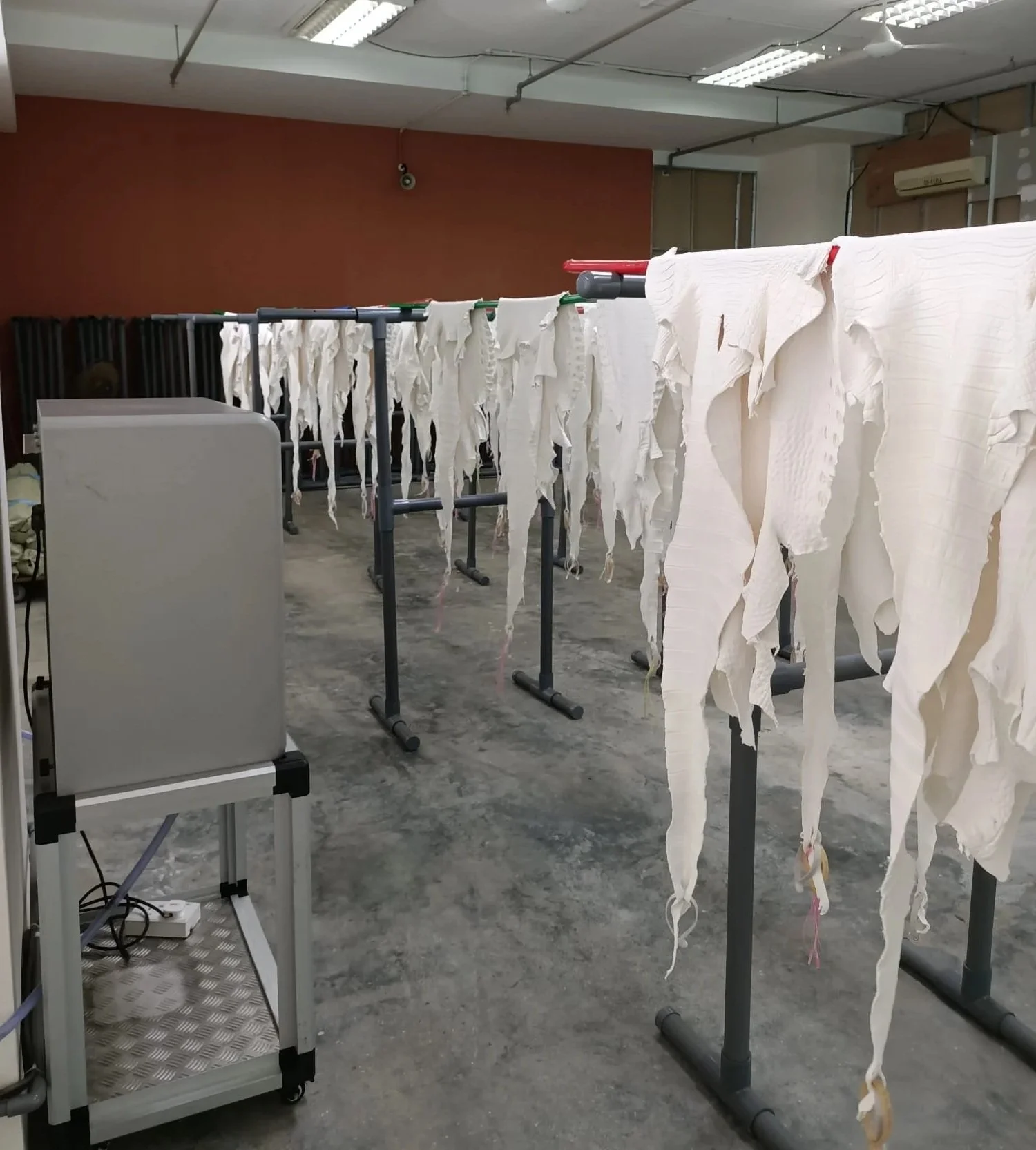
Prior to intervention, drying relied largely on ambient conditions and passive ventilation. As a result, drying cycles often extended over several days. This slowed production flow, limited batch turnover, and increased exposure to microbial growth while materials remained damp.
Storage conditions posed a parallel risk. Relative humidity in storage rooms regularly exceeded 60% RH, a recognised threshold above which mould growth accelerates on organic materials such as leather. Mustiness and surface deterioration became a growing concern, particularly given the high value of the finished goods.
THE ASSESSMENT
Looking beyond relative humidity to understand drying performance.
Kruger conducted a site visit to assess both drying performance and storage stability across multiple rooms within the facility. Rather than evaluating relative humidity in isolation, the assessment focused on two critical performance indicators: time required for leather to dry sufficiently for the next processing stage, and the ability to maintain stable storage humidity around 50% RH to prevent mould.
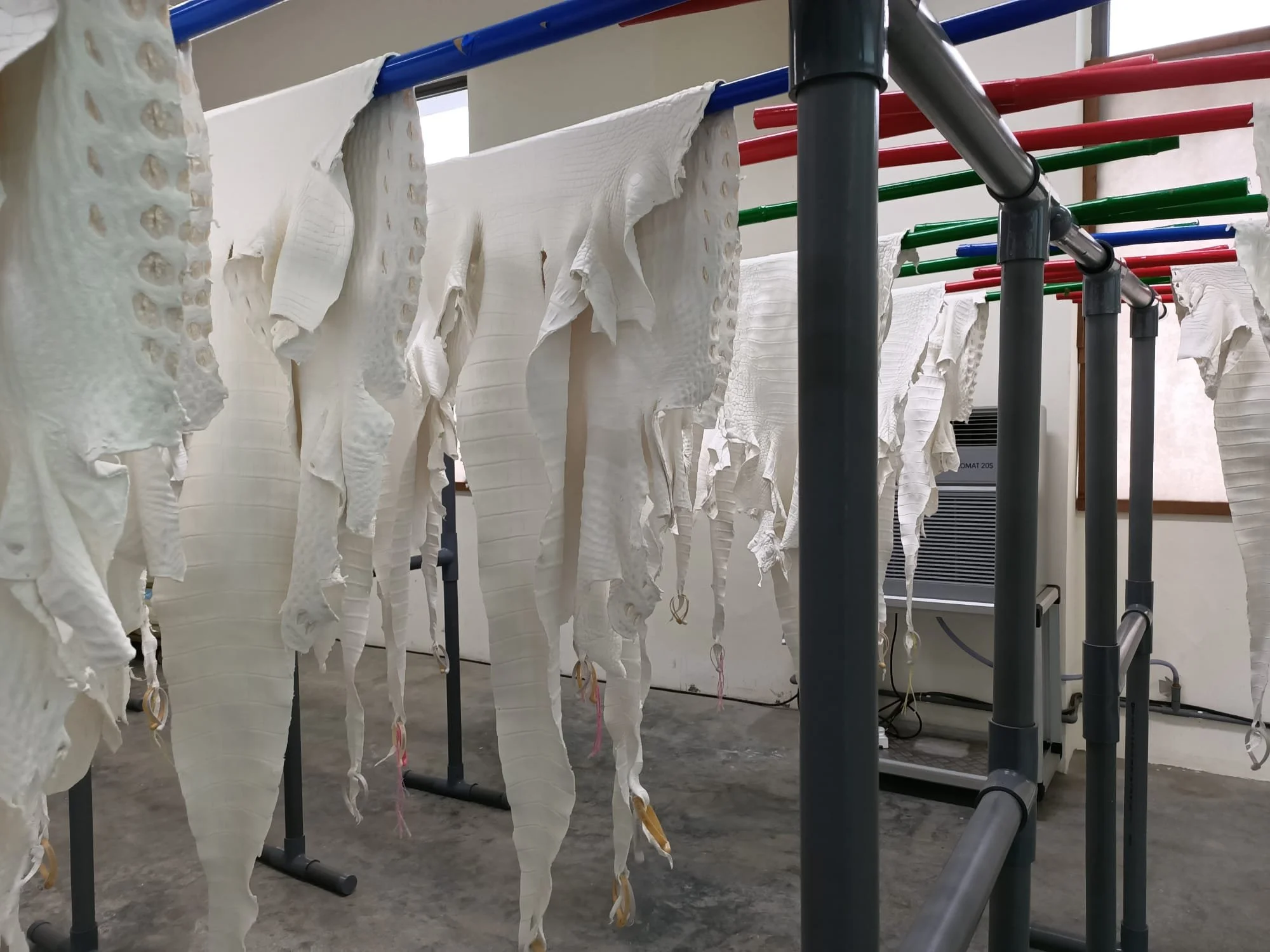
This distinction was important. Drying efficiency depends not only on reducing ambient humidity, but on how effectively dry air is delivered to, and moisture is removed from the surface of the leather. Airflow velocity, circulation patterns, and material layout all play a critical role in how quickly moisture can be released and carried back to the dehumidifier.
For storage areas, the requirement is simpler and more stable. The objective is to control the relative humidity of the air itself, maintaining conditions around 50% RH to inhibit mould growth. In Singapore’s climate, over-drying is rarely a concern. Air movement remains beneficial in enclosed storage spaces, helping to prevent stagnant pockets of moist air rather than posing a risk to the goods.
KRUGER’S SOLUTION
Deploying high-airflow dehumidification for industrial drying.
Based on the assessment, Kruger recommended an industrial dehumidification solution using the Secomat Series, equipped with stronger fans to deliver high airflow and sustained moisture extraction. The system was configured to serve two distinct functions.
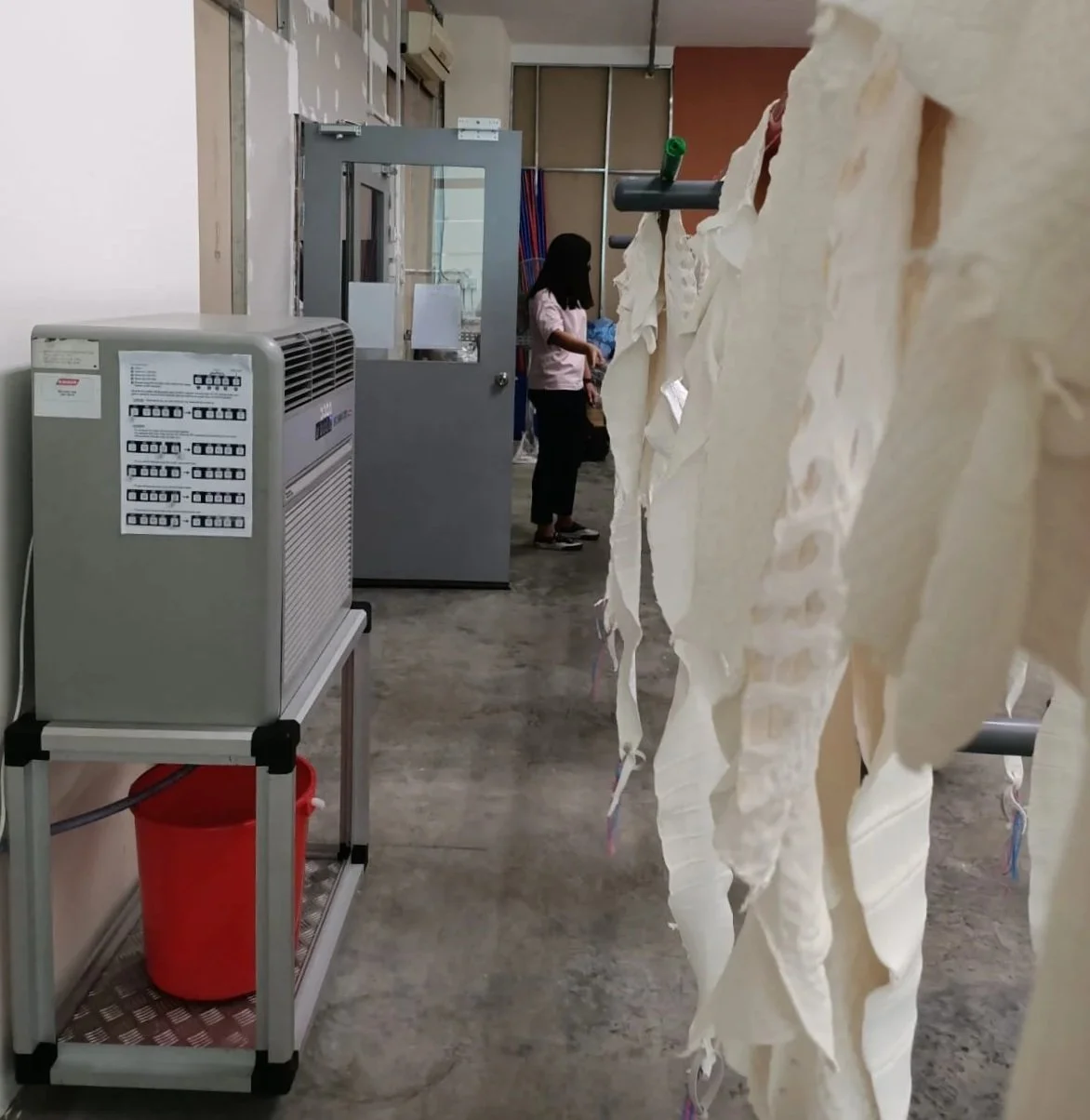
Leather was advised to be laid parallel to airflow rather than facing it, particularly for items positioned closer to the dehumidifier. This prevented front rows from blocking airflow to materials behind and allowed air to circulate evenly through the drying zone. Where the reach of the Secomat units tapered off, additional circulation fans were recommended, positioned to move moist air from the rear of the space back towards the dehumidifiers. This ensured that released moisture was continuously captured rather than lingering in the room, accelerating overall drying performance.
In drying rooms, Secomat units provided strong, dry airflow to actively strip moisture from leather surfaces, significantly accelerating evaporation compared to passive methods. In storage areas, the system was configured to maintain relative humidity at approximately 50% RH, inhibiting mould growth while preserving material integrity.
Following a successful trial, the facility installed a total of seven Secomat 20S units, with two units dedicated to drying operations and five units allocated to storage areas, reflecting the different moisture control requirements of each zone.
Kruger’s recommendations extended beyond equipment selection. The solution also incorporated practical recommendations on material layout and air circulation, ensuring that airflow reached beyond the immediate range of the dehumidifiers and moisture was effectively returned to the system.
SOLUTION DEPLOYMENT
7x Secomat 20S units
—Two units dedicated to drying operations
—Five units allocated to storage areas
THE IMPACT
Multi-day drying cycles were cut down into an efficient 24-hour process.
Drying performance improved immediately.
Batch drying time was reduced from multiple days to approximately 24 hours, allowing new batches to be processed daily rather than waiting for extended drying periods. Depending on workflow and batch size, this translated into a two- to threefold increase in production throughput.
In storage areas, relative humidity remained consistently around 50% RH, significantly reducing mould risk and improving material preservation. The operational gains led the facility to expand its installation beyond the initial deployment, indicating sustained confidence in the solution’s performance.
WHY IT MATTERS
In moisture-intensive manufacturing environments such as leather processing, humidity control is not a secondary environmental issue. It directly influences drying time, production throughput, and the risk of material spoilage.
This case shows how airflow-driven dehumidification can materially increase capacity while preserving product quality, without structural changes or added manpower.
Talk to Singapore’s Humidity Control Experts.
Whether you’re managing an industrial facility or improving your home environment, Kruger provides in-house engineering, local servicing, and expert consultation at every step.
Start with a free humidity assessment and trial unit, and experience why Kruger is trusted by Singapore’s industries and homeowners alike.